Herbal Hair Care: How to Build a Natural Hair-Care Routine with Plants


Herbal hair care doesn’t have to be complicated. In fact, some of the loveliest ways to care
for our hair begin with remarkably simple things: a handful of herbs, a jar of oil, a pot of water, and a little time.
Long before shelves were filled with shampoos, conditioners, masks and serums, people turned to plants to cleanse, soften, condition and care for their hair and scalp.
As an herbalist, I’ve been growing, blending and working with herbs for more than twenty years. Over that time, herbal hair care has become one of my favourite examples of how traditional plant knowledge can still fit beautifully into everyday life.
And you certainly don't need to replace everything in your bathroom cabinet overnight.
A botanical hair-care routine can begin with just one plant. Or one simple product.
Start With Your Hair, Not the Trend
One of the most important things I’ve learned about natural hair care is that there is no single “perfect” herb or routine.
Fine hair may be overwhelmed by rich oils that dry or curly hair loves. A dry scalp has very different needs from an oily one. Hair that has been coloured, heat styled or exposed to lots of sun and wind may need something entirely different again.
Instead of asking What is the best herb for hair?, I prefer to ask:
What does my hair need right now?
From there, we can choose our plants.
A Few Beautiful Herbs for Hair Care
Rosemary
Rosemary is probably one of the best-known hair herbs, and with good reason. Its aromatic leaves have a long history of use in scalp and hair preparations.
A simple rosemary infusion can be used as a botanical hair rinse, while dried rosemary can also be infused into oil for scalp and pre-wash treatments.
It is an especially lovely herb when you want your hair-care routine to feel fresh, invigorating and wonderfully herbal.
Chamomile

Chamomile is much gentler in character.
Its tiny flowers make a beautiful addition to rinses and other preparations, particularly when the scalp needs something soothing. Chamomile has also traditionally been used in hair preparations intended for blonde and lighter-coloured hair.
And there is something wonderfully old-fashioned about steeping a pot of golden chamomile flowers for your hair.
Marshmallow Root
If you've ever prepared marshmallow root in water, you'll understand immediately why herbalists love it.
Marshmallow root contains mucilage—the slippery, soothing plant compounds that give a properly prepared infusion its characteristic texture. That quality makes marshmallow especially interesting in botanical preparations intended to provide slip and softness.
For hair that tangles easily or feels dry and unruly, it is a lovely plant to explore.
Oats
Oats may not immediately come to mind when we think about herbal hair care, but humble kitchen herbs and grains are often some of the most useful ingredients in home herbalism.
Oats are wonderfully gentle and are particularly suited to simple preparations for dry or sensitive skin and scalp.
Rose

Rose is one of those plants I seem to return to again and again.
Beyond its beautiful scent, rose has a long tradition of cosmetic use. Rose petals can be incorporated into infusions, vinegars and oils, making them an especially lovely addition when you want hair care to feel like something more than another task to complete.
Which brings me to something I think we've lost in modern beauty culture.
Hair Care Can Be a Ritual of Care Without Being Complicated
We are often sold the idea that caring for ourselves requires an enormous collection of products.
It doesn't.
An herbal hair-care practice might simply mean preparing an infusion while you're making tea.
It might mean keeping a jar of herbal vinegar in the bathroom for occasional rinses.
It might mean massaging a small amount of herb-infused oil through your hair before washing it.
Or it might mean growing one pot of rosemary outside your kitchen door and discovering how many things you can make from it.
There is something deeply satisfying about knowing what is in the products we put on our bodies—and even more so when we've grown some of those ingredients ourselves.
Three Simple Ways to Begin
If you're curious about botanical hair care but don't know where to start, keep it simple.
Try an herbal rinse.Make a strong herbal infusion, allow it to cool completely, strain it very well and use it as part of your hair-care routine.
Experiment with an infused oil.Dried herbs can be infused into a suitable carrier oil to create a beautiful pre-wash hair or scalp oil.
Learn one plant at a time. You don't need fifteen herbs. Start with rosemary, chamomile, rose—or whatever useful hair herb you already have growing nearby—and learn it well.
That last one may be my favourite.
Herbalism doesn't have to be about collecting more and more ingredients. Often, it is about developing a deeper relationship with the plants already around us.

From the Herb Garden to The Wild Woman's Guide
Eventually, all of these years of growing herbs, making preparations, experimenting with botanical hair care and teaching others came together in a book.
The Wild Woman's Guide to Herbal Hair Care: Botanical Rituals for Strong, Soft, Wildly Beautiful Hair is my guide to creating a more plant-centred approach to caring for your hair.
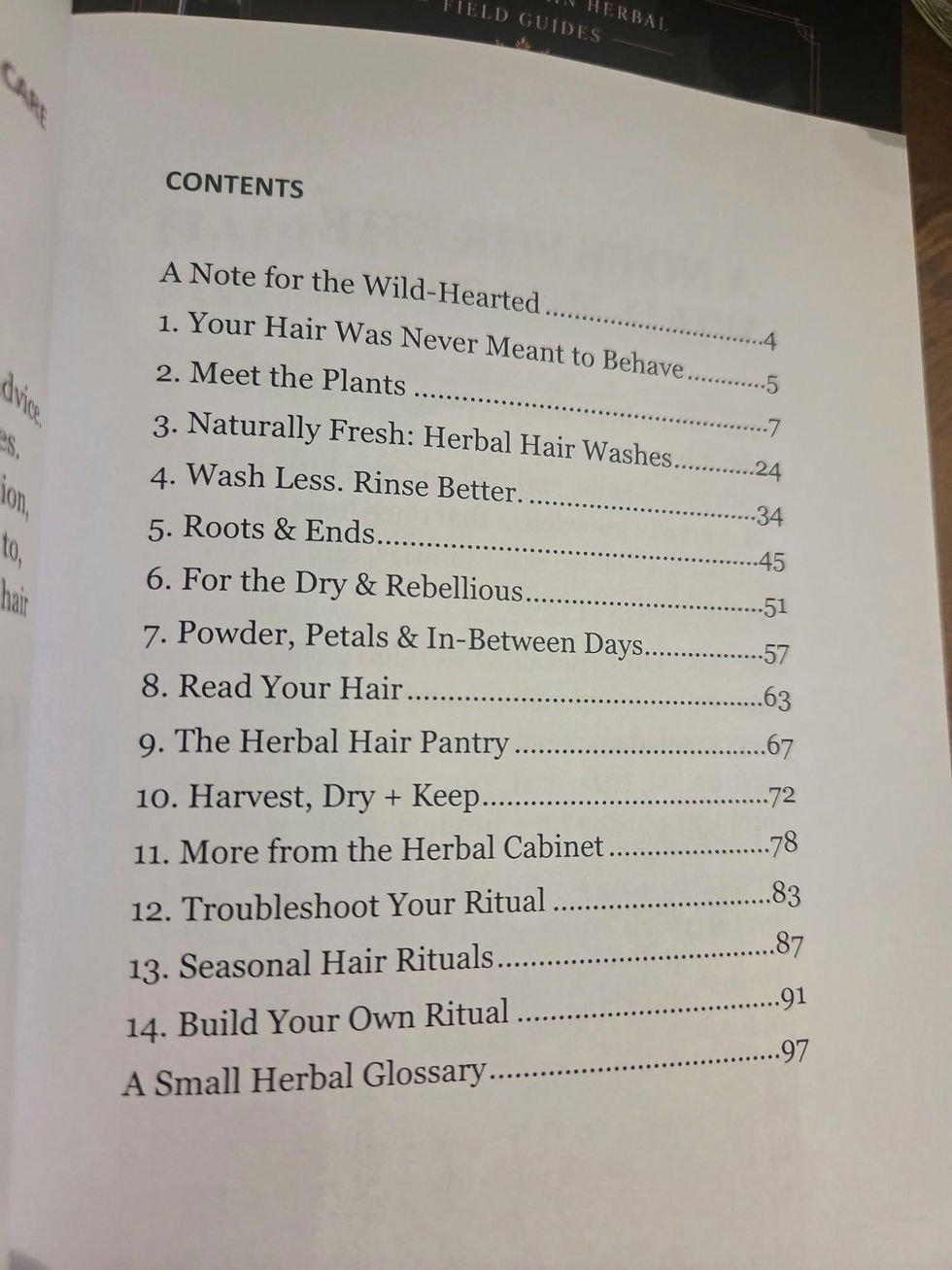
Inside, I explore herbs used in hair care, infused oils, herbal rinses, vinegars, simple botanical preparations, seasonal approaches to hair care, recipes, growing and gathering herbs, and ways to build a routine that actually suits your own hair.
But more than that, I wanted to create the kind of herbal book I love myself—practical and useful, but also beautiful.
Because herbalism has never felt clinical to me.
It smells like rosemary crushed between your fingers. It looks like chamomile drying in baskets and jars of herbs lining a shelf. It's the garden in summer, the kitchen in autumn and the quiet pleasure of making something useful with your own hands.
That is the world I wanted to put into this book.
And it is the same philosophy behind everything we make here at Hardy Mountain Herbal.
The Wild Woman's Guide to Herbal Hair Care
Botanical rituals for strong, soft, wildly beautiful hair
Written by the herbalist behind Hardy Mountain Herbal and created for anyone who wants to bring a little more plant knowledge—and a little more wildness—into everyday hair care.
Available now in paperback and Kindle, with hardcover availability depending on marketplace.

This article is for educational purposes and is not intended as medical advice. Always consider individual sensitivities and allergies when introducing new botanical ingredients to your skin, scalp or hair-care routine.


Comments